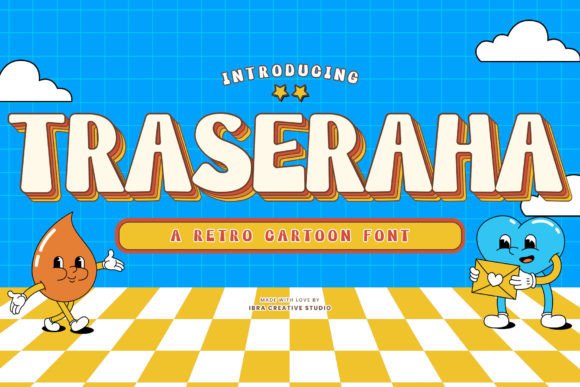
Traseraha Font: Whimsical Retro Charm for Handmade Labels & Printables
As a maker who’s spent years hand-cutting vinyl, proofing candle labels, and designing wedding invites that actually sell, I’ll tell you straight: not every script font earns its place in my design toolkit. But Traseraha — that playful, retro cartoon font from Traseraha Studios — is one I reach for again and again. It doesn’t just look fun; it works beautifully across physical and digital products without sacrificing clarity or commercial polish.
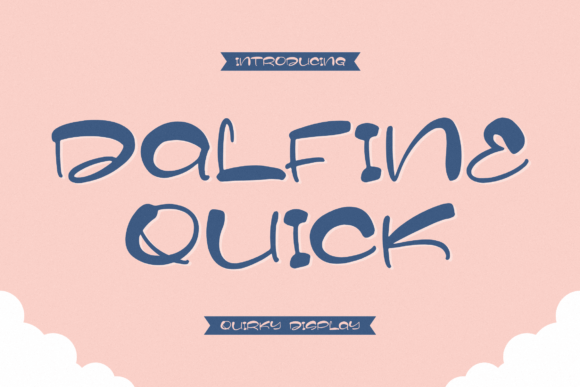
Visually, Traseraha lands somewhere between Saturday morning cartoons and vintage diner signage — rounded, bouncy letterforms with subtle bounce and expressive curves. It’s not overly ornate, so it avoids the “hard-to-cut” trap many decorative scripts fall into. No thin hairlines or fragile serifs here. Instead, it offers generous spacing, consistent stroke weight, and gentle swashes that add personality without compromising legibility at small sizes. That’s huge when you’re laser-cutting 0.25-inch sticker text or printing tiny boutique tags.
I use Traseraha most often for short, high-impact phrases: “Hand-Poured,” “Made With Love,” “Small Batch,” or “Farmhouse Fresh.” Its rhythm makes names pop — think “Luna & Co.” on a ceramic mug or “Hazel’s Honey” on a jar label. It’s not built for long paragraphs (no script font truly is), but as a display font? Absolutely. It shines on greeting cards, invitation headers, printable wall art (“You’re My Person”), planner cover pages, and seasonal SVG designs — especially for Easter, birthdays, and summer markets.
For product packaging, Traseraha adds instant warmth and approachability. On soy wax candle labels, it softens minimalist kraft paper while keeping the brand feel intentional and handmade. On tea box wraps or bath salt bags, it gives a nostalgic, comforting vibe — like something your favorite local apothecary would use. And yes, it cuts cleanly on Cricut and Silhouette machines: I’ve run it through my Maker 3 at 0.18" height with zero issues, and it holds up even on matte vinyl stickers applied to curved mason jars.
Wedding stationery is another sweet spot. Traseraha’s charm bridges modern and rustic — perfect for welcome signs, seating charts, or foil-stamped escort cards. Paired with a clean sans serif like Montserrat or Inter for body text, it creates hierarchy without visual noise. For digital printables, I layer Traseraha over watercolor textures or grainy paper scans, then export as high-res PNGs for Etsy listings. Customers consistently comment on how “inviting” and “thoughtful” the typography feels — which directly translates to higher perceived value.
Readability matters — especially when your buyer is squinting at a mockup preview on their phone or reading a tag under dim boutique lighting. Traseraha’s open counters (the enclosed spaces in letters like ‘a’, ‘e’, and ‘o’) and friendly x-height mean it stays legible down to 14pt in print and 20px on screen. I avoid using it below 10pt for physical labels, but for 1.5"–3" signage or tote bag prints? It sings.
Font pairing is where Traseraha really flexes its versatility. As a Script Amp typeface, it’s designed to complement — not compete. My go-to pairings:
- A warm sans serif (like Poppins or Quicksand) for product descriptions, ingredient lists, or website body text — clean contrast that keeps the focus on your message;
- A subtle serif (such as Lora or Playfair Display) for formal invitations or luxury packaging — adds quiet elegance beside Traseraha’s playfulness;
- A monoline handwritten font (not too shaky!) for secondary accents like “Est. 2022” or “Handmixed in Brooklyn” — maintains cohesion without monotony.
The Traseraha family includes standard OTF and TTF files, plus stylistic alternates and contextual ligatures — little extras that make “ff”, “fi”, and “fl” flow more naturally. If you're designing bilingual labels or serving international customers, check whether the version you purchase supports extended Latin characters (it typically does). No multilingual surprises — just smooth, consistent rendering across English, Spanish, French, and German product copy.
One practical note every seller must know: Traseraha is licensed for commercial use. That means you can confidently use it on physical goods you sell (mugs, shirts, stickers), digital downloads (Canva templates, printable planners), SVG files for craft cutters, client branding projects, and social media graphics — no extra fees or attribution required. Just keep your license file handy and avoid reselling the font files themselves. It’s a true premium font built for makers who need reliability, not red tape.
Real-world examples that work right now:
- A farmhouse-style “Welcome Home” wooden sign — Traseraha for the main phrase, paired with a weathered serif for the date;
- Mini gift tags for handmade soap — printed on recycled cardstock, sized at 1.75" wide, with Traseraha in bold weight;
- Holiday cookie packaging — Traseraha spelling “Merry & Bright” on a kraft box lid, backed by a simple geometric border;
- Digital party kit for Etsy — Traseraha headlines for banners, cupcake toppers, and “Happy Birthday” confetti SVGs;
- Small-batch hot sauce labels — “Smoky Chipotle” in Traseraha, ingredients listed in a crisp sans serif underneath.
What sets Traseraha apart isn’t just nostalgia — it’s intentionality. Every curve, spacing decision, and alternate glyph serves a purpose: helping your handmade product stand out on a crowded shelf, feel special in someone’s hands, or land with authenticity in a digital cart. It’s the kind of typeface that quietly elevates your entire brand identity — not because it shouts, but because it connects.
If you’re tired of fonts that look great in mockups but fail at 12pt on a sticker sheet — or worse, get rejected by cutting software — give Traseraha a real test run. Load it into your design app, size it at 16pt on a sample label, and print it. Then ask yourself: does this feel like *my* brand? Does it reflect the care I put into every stitch, pour, and package? More often than not — especially for crafters building something real — the answer is yes.