Agatha Signature: A Modern Handwritten Font for Digital Branding
As a UI designer who builds landing pages, SaaS dashboards, and boutique e-commerce experiences, I choose fonts not just for beauty—but for behavior. Agatha Signature stands out in the Script Amp category because it’s not merely decorative; it’s a functional display font that shapes tone, guides attention, and reinforces brand identity across digital touchpoints.
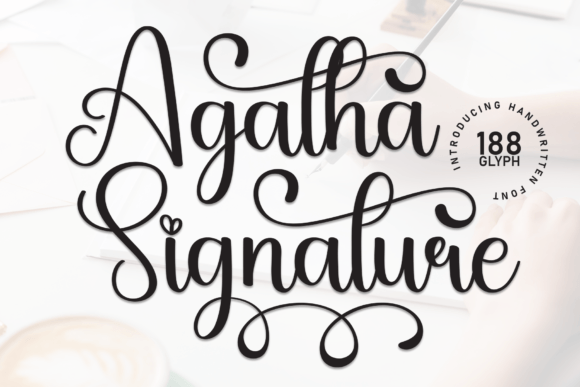
Agatha Signature is a contemporary handwritten typeface with graceful, rhythmic strokes—neither overly ornate nor stiffly formal. Its letterforms balance fluidity and clarity: generous x-height, open counters, and subtle contrast between thick and thin strokes. That means it reads well at larger sizes on screens, maintains personality at 32–60px on hero sections, and avoids visual fatigue during quick scanning. It’s designed as a premium font for digital use—not a scanned calligraphy brush—but one that still feels human, intentional, and curated.
Where Agatha Signature Performs Best in Web Layouts
This isn’t a body text font—and it shouldn’t be. Agatha Signature shines where hierarchy and emotional resonance matter most:
- Hero section headlines: Paired with a clean sans serif (like Inter or Manrope), Agatha Signature instantly signals sophistication—ideal for coaching sites, creative studios, or luxury skincare brands.
- Landing page subheadings and value statements: Use it for short, high-impact phrases like “Designed for clarity” or “Your vision, elevated”—not full paragraphs.
- CTA buttons and micro-interactions: At 20–24px with tight tracking and ample padding, it adds warmth to primary actions without sacrificing tap target size on mobile.
- Branded banners and product cards: In online stores, Agatha Signature works powerfully on hero banners (“New Collection • Spring 2024”) or limited-edition labels—reinforcing exclusivity and craft.
- Digital course or membership headers: On sales pages, it conveys approachability and authority simultaneously—critical when selling expertise or creative services.
Readability & Responsiveness: Practical Considerations
Agatha Signature is optimized for screen legibility—but only when used intentionally. On light backgrounds, its stroke contrast reads cleanly. Over imagery, use a subtle semi-transparent overlay or soft drop shadow to ensure contrast meets WCAG AA standards. Avoid using it below 20px on desktop or below 18px on mobile—even with excellent hinting, fine script details begin to blur on lower-DPI displays.
On dark mode interfaces, test carefully: some script fonts lose definition against charcoal or navy. Agatha Signature holds up better than many peers thanks to its balanced weight distribution, but always preview on real devices—not just browser emulators. Also note: it includes standard OpenType features like contextual alternates and ligatures, which enhance flow in headline settings—but these are best left enabled only where supported (modern browsers, not legacy email clients).
Smart Font Pairing for Digital Clarity
Agatha Signature is a script font, so pairing is non-negotiable. Think of it as your brand’s voice—and every other font as its supporting cast. For most web projects, pair it with a highly legible, neutral sans serif: Inter, Poppins, or Montserrat work reliably across devices and load quickly via Google Fonts or self-hosted WOFF2. These combinations create strong visual rhythm—Agatha Signature sets the tone; the sans serif delivers information efficiently.
For editorial or lifestyle brands (think blogs, newsletters, or portfolio sites), try pairing Agatha Signature with a warm, low-contrast serif like Lora or Cormorant Garamond. This elevates perceived credibility and supports longer-form reading—while still letting the script font anchor key moments: section dividers, pull quotes, or author bylines.
Licensing, Formats & Real-World Deployment
Agatha Signature ships in WOFF2, WOFF, and OTF formats—making it production-ready for modern websites. If you’re embedding it via @font-face, prioritize WOFF2 for compression and performance. Most licenses include web use for unlimited domains under a single commercial license—essential if you’re a freelancer delivering assets to clients or building templates for marketplaces like ThemeForest or Creative Market.
Always verify multilingual support before launching global-facing sites. Agatha Signature covers Latin Extended-A, so it handles accented characters common in Spanish, French, Portuguese, and German—crucial for EU-facing SaaS tools or bilingual blogs. It does not include Cyrillic or Arabic glyphs, so plan accordingly for broader localization.
When to Reach for Agatha Signature—And When Not To
Use Agatha Signature when your goal is to signal craftsmanship, intimacy, or refined energy—especially in contexts where users make quick emotional judgments: first impressions on a homepage, trust signals on a checkout page, or differentiation in a crowded app marketplace.
Avoid it for navigation menus, form labels, data tables, or any interface element requiring rapid parsing. Don’t use it for logos unless you’ve tested scalability across favicon sizes, app icons, and social avatars—its connected forms can collapse at tiny scales.
In practice, I’ve deployed Agatha Signature successfully for:
- A female-led financial coaching platform—used in hero headlines and testimonial accents to soften technical messaging.
- A ceramicist’s online store—applied to product category banners and limited-run tags, reinforcing handmade authenticity.
- A design-focused newsletter header—paired with Source Serif Pro for article previews, creating editorial distinction without pretension.
- A wellness app’s onboarding flow—subtle use in welcome modals and milestone badges to humanize digital interactions.
At its core, Agatha Signature isn’t about trend—it’s about intentionality. It supports brand voice without overwhelming function, adds elegance without sacrificing usability, and fits naturally into the workflow of designers building real, performant, human-centered digital products. Whether you're refining a brand kit, shipping a new landing page, or selecting type for a client’s Shopify theme, Agatha Signature earns its place as a versatile, trustworthy display font in today’s Fonts landscape.